
How to Optimize AI API Costs and Performance: Caching, Quantization, and Token Counting

Hi! Modern AI APIs open up vast opportunities for automation, data analysis, content creation, and building intelligent services. But as usage grows, so do the costs of processing requests. For businesses and developers, it is therefore important not only to get high-quality results but also to use resources efficiently.
Three factors typically have the biggest impact on the cost of AI solutions:
- the number of tokens processed;
- reprocessing the same data;
- the computational complexity of models.
- Why AI API costs can rise quickly
- Token counting: the foundation of budget control
- Which tokens are billed?
- Practical ways to reduce token usage
- Remove duplication
- Shorten conversation history
- Limit response length
- Caching: the fastest way to cut costs
- The main types of caching
- 1. Response caching
- 2. Semantic caching
- 3. Context caching
- Comparing caching methods
- Model quantization: fewer resources with minimal quality loss
- Key benefits
- Potential trade-offs
- A comprehensive approach to optimization
- Recommended sequence
- Conclusion
- FAQ
- What is a token in an AI API?
- Why is it important to count tokens?
- Which optimization method delivers the greatest savings?
- Does quantization affect response quality?
- How can I reduce token usage without sacrificing quality?
- What is semantic caching?
That is why caching, quantization, and token tracking are considered essential tools for optimizing AI systems. In practice, the best results come from a step-by-step approach: start by measuring and managing token usage, then introduce caching, and only after that optimize inference and models.
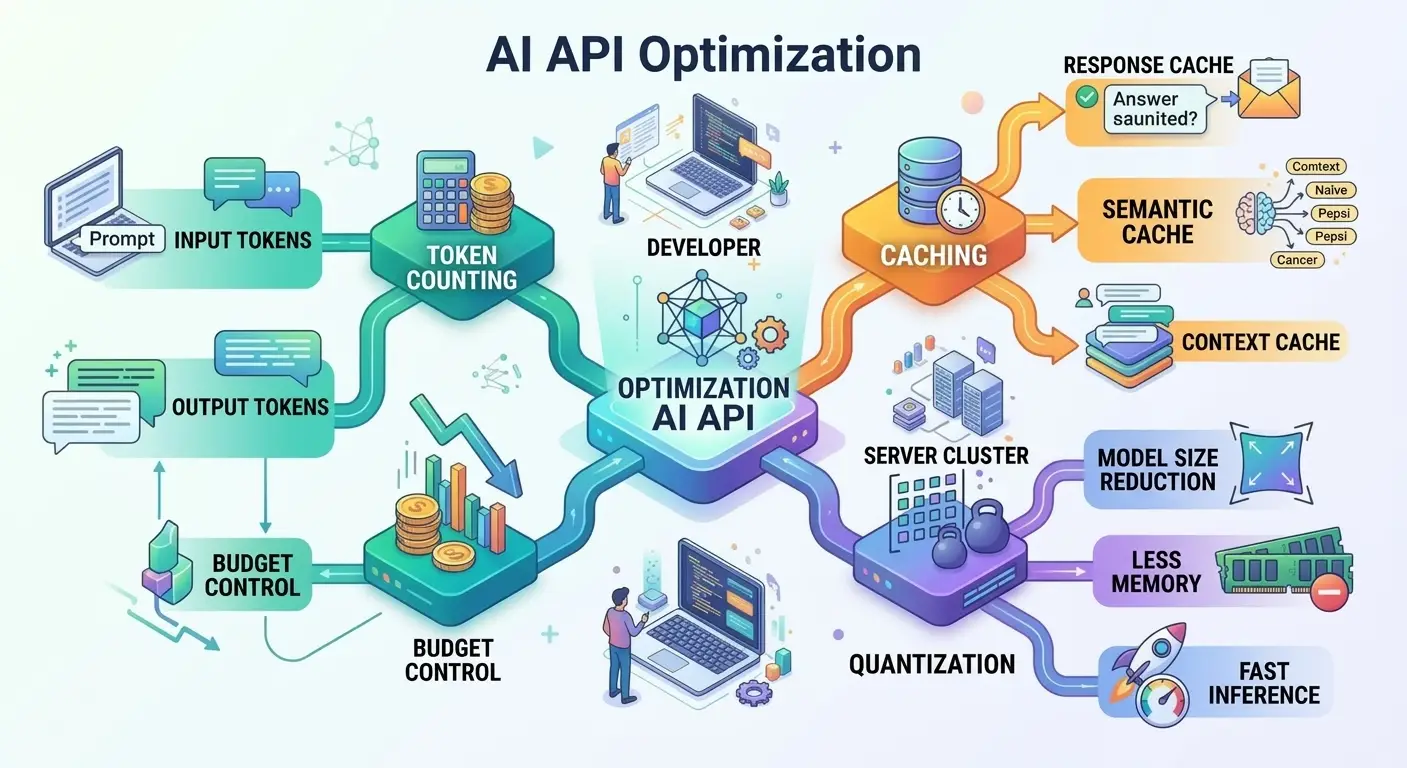
Why AI API costs can rise quickly
Many teams run into the same problem: a pilot project is inexpensive to run, but after launch, bills start climbing exponentially.
The main causes include:
| Cause | Impact on costs |
|---|---|
| Long prompts | Increase the number of input tokens |
| Overly long responses | Increase the number of output tokens |
| Repeated requests | Paying for the same computations again |
| Long conversation history | Expands the context |
| Using powerful models for simple tasks | Paying for more resources than needed |
| No caching | Repeated API calls |
Every extra token affects not only cost but also response latency. Large contexts increase request processing time and put additional load on your infrastructure.
Token counting: the foundation of budget control
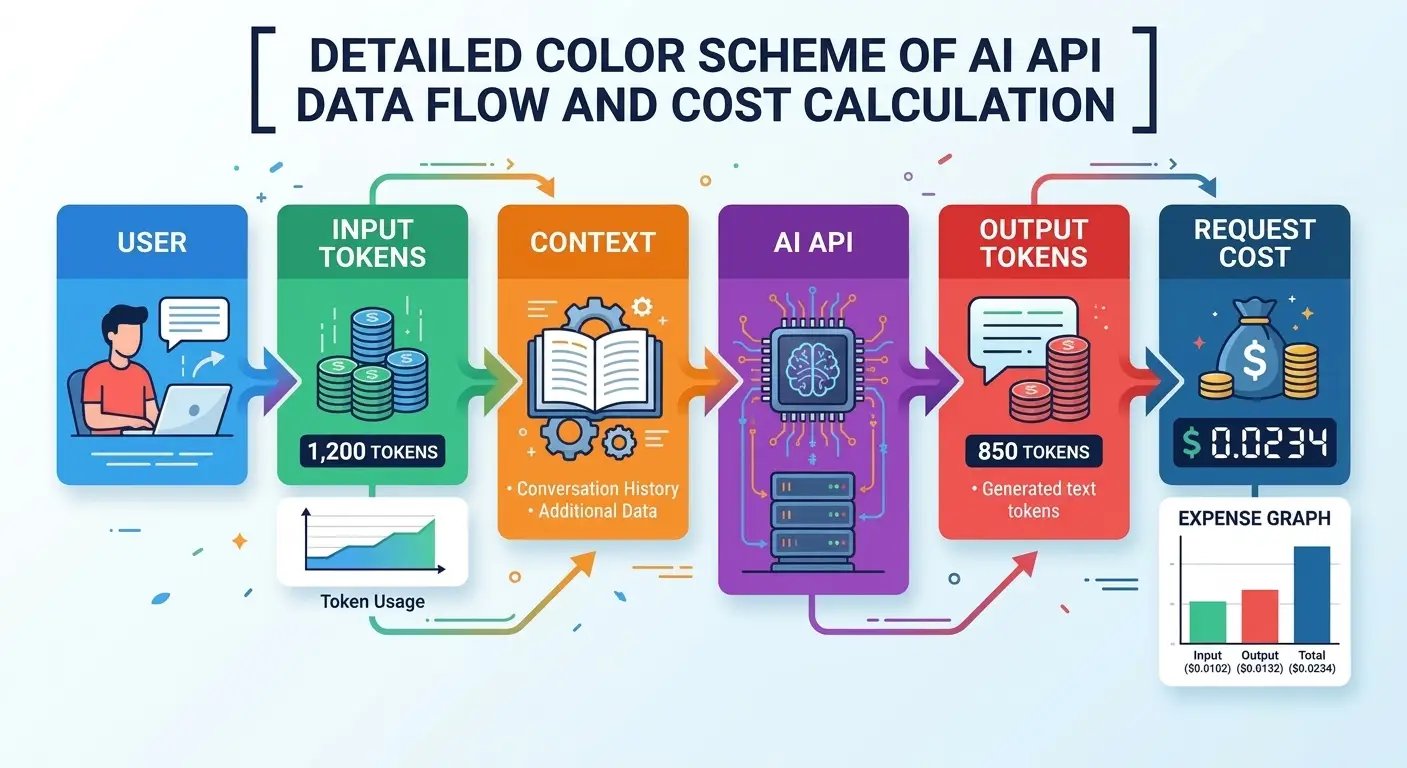
Tokens are the basic units of text processed by a language model. They account for most of the cost of using AI APIs.
Which tokens are billed?
| Token type | Description |
|---|---|
| Input | Data sent to the model |
| Output | Text generated by the model |
| Context | Conversation history or additional data |
| System | Instructions for the model |
Practical ways to reduce token usage
Remove duplication
A common problem is repeating the same instructions multiple times.
Instead of:
Always respond in English.
Use the English language.
Do not use any other languages.
Use:
Respond in English only.
Shorten conversation history
For long-running chats, consider:
- removing outdated messages;
- keeping only relevant context;
- automatically summarizing previous conversations.
Limit response length
Clear instructions help prevent unnecessarily long responses:
- “Up to 300 words”
- “Format as a table”
- “Give 5 bullet points”
This approach can often reduce costs without compromising the quality of the results.
Caching: the fastest way to cut costs
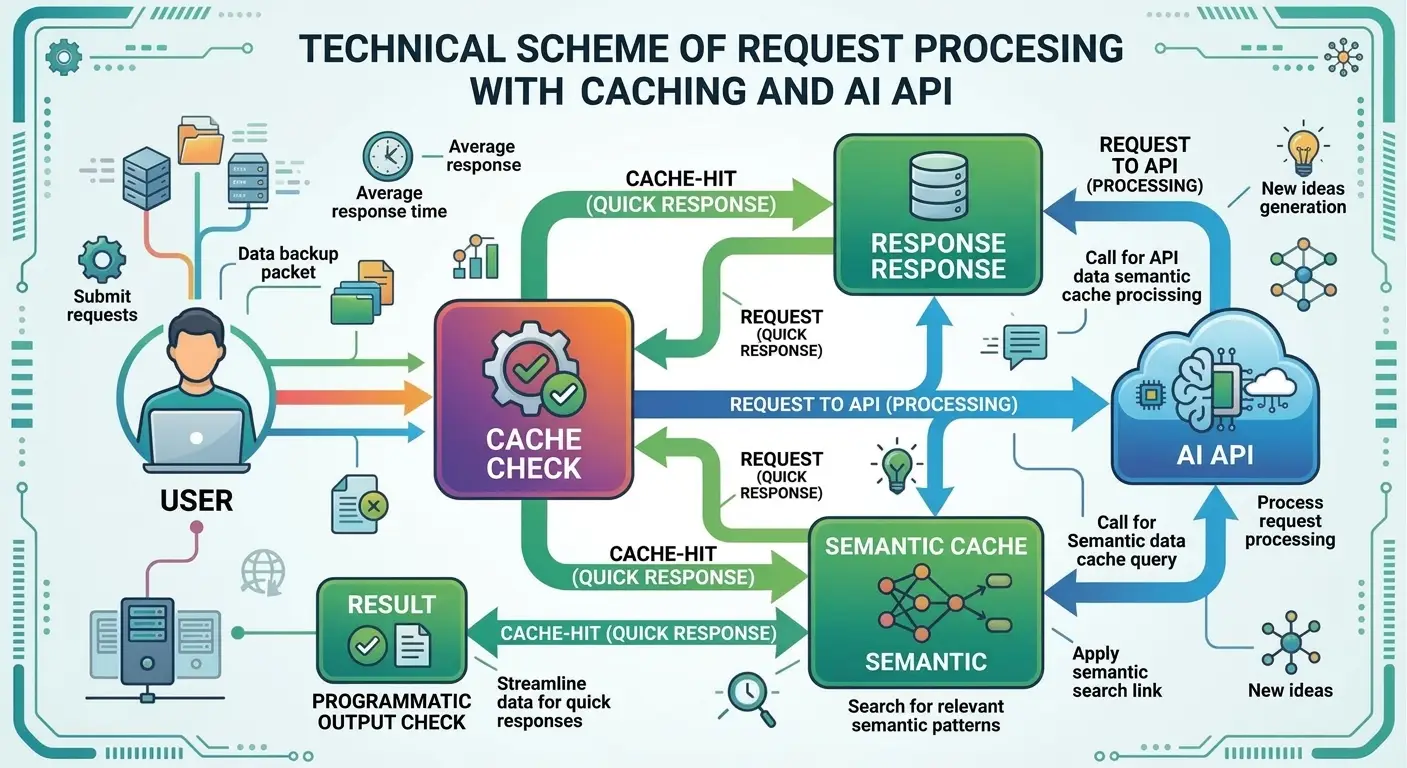
Caching avoids repeating computations for identical or similar requests.
In many AI systems, a significant share of requests are repeated in full or in part, which is why caching often delivers the greatest savings.
The main types of caching
1. Response caching
This is the simplest option.
Here is how it works:
- The user submits a request.
- The system checks the cache.
- If a response is available, the system returns it.
- If not, it calls the AI API.
2. Semantic caching
The system finds requests that are similar in meaning, not just identical ones.
For example:
- “How can I optimize an AI API?”
- “How can I reduce AI API costs?”
These requests may use the same cached result.
3. Context caching
This is especially effective for:
- large documents;
- knowledge bases;
- system instructions;
- multi-step agents.
Instead of sending a large context repeatedly, the system reuses a prepared version.
Comparing caching methods
| Type | Complexity | Savings |
|---|---|---|
| Response cache | Low | High |
| Semantic cache | Medium | Very high |
| Context cache | Medium | Very high |
| Embedding cache | Medium | High |
Model quantization: fewer resources with minimal quality loss
Quantization reduces the precision used to represent a model’s numerical parameters, which lowers memory consumption and speeds up computation.
In simple terms, the model takes up less space and runs faster.
Key benefits
| Benefit | Result |
|---|---|
| Smaller memory footprint | Lower hardware costs |
| Faster inference | Lower latency |
| Higher throughput | More requests per second |
| Reduced energy consumption | Lower operating costs |
Potential trade-offs
| Parameter | Impact |
|---|---|
| Accuracy | May decrease slightly |
| Complex reasoning quality | Requires testing |
| Performance on specialized tasks | Needs validation |
The best practice is to run comparative tests before and after quantization, evaluating real business metrics rather than technical metrics alone.
A comprehensive approach to optimization
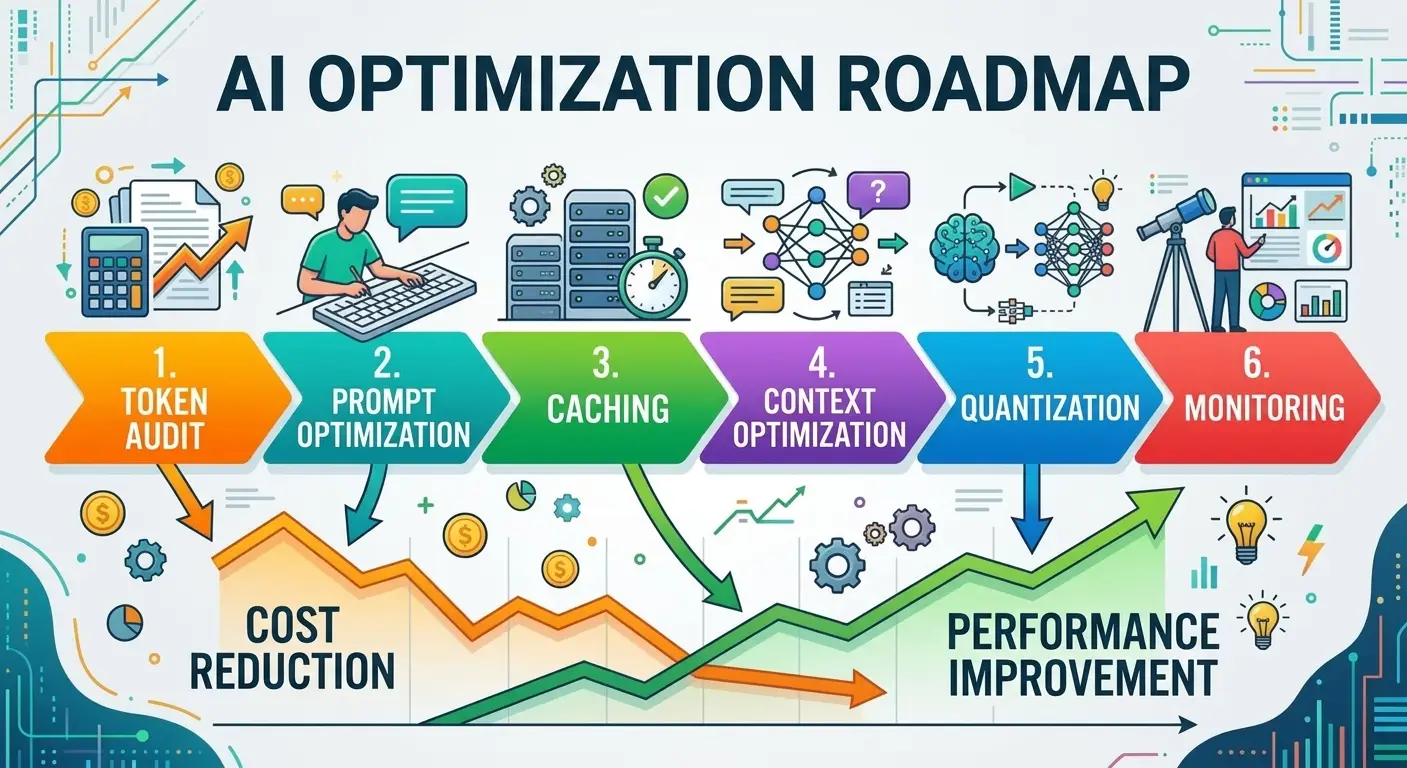
Companies achieve the best results when they optimize in stages.
Recommended sequence
| Stage | Expected impact |
|---|---|
| Token audit | Identify overspending |
| Prompt reduction | Lower costs |
| Caching | Significant savings |
| Context optimization | Reduced latency |
| Quantization | Improved performance |
| KPI monitoring | Track results |
This sequence most often delivers the best balance between cost and impact.
Conclusion
Optimizing AI APIs is not a one-time task; it is an ongoing process of managing costs and performance.
The biggest gains usually come from:
- regular token counting;
- removing unnecessary context;
- multi-layer caching;
- using quantization for local or in-house models;
- continuously monitoring key metrics.
Combining these approaches can significantly reduce costs, improve response times, and make AI solutions easier to scale.
FAQ
What is a token in an AI API?
A token is a unit of text that a model uses to process input and generate a response. The cost of most AI APIs depends on the number of tokens used.
Why is it important to count tokens?
Without tracking token usage, it is difficult to forecast costs or identify where a system is overspending.
Which optimization method delivers the greatest savings?
In most cases, caching has the biggest impact because it can eliminate repeated AI API calls entirely.
Does quantization affect response quality?
It can, but the impact is usually small. Test your real-world use cases before rolling it out.
How can I reduce token usage without sacrificing quality?
Use shorter instructions, remove duplication, limit conversation history, and specify the required response format clearly.
What is semantic caching?
Semantic caching lets a system reuse cached results for requests with similar meanings, not just requests that are exactly the same.

